
Tariffs Don’t Miss Earnings – Operating Models Do

AutoZone just delivered another tough headline: revenue up, earnings down, and a sixth straight miss versus Wall Street EPS expectations. For the latest quarter, net sales grew about 8% to roughly $4.6 billion, comparable sales rose mid-single digits, but EPS landed just over $31 per share – below consensus – as gross margin and operating profit both declined (latest earnings release).
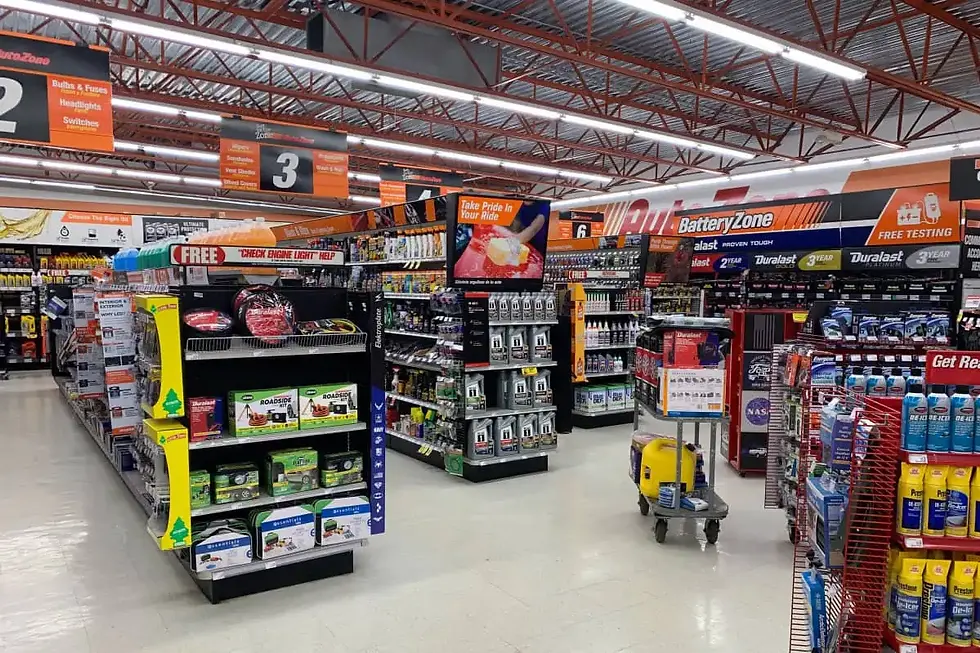
Management is rightly calling out tariffs and a large non-cash LIFO charge as key culprits, with gross margin compressed by about 200 basis points and an accounting impact of roughly $98 million tied to higher costs and duties. But this is now the sixth consecutive quarter AutoZone has missed EPS estimates, even as same-store sales have grown for six quarters in a row and the company continues to open stores aggressively.
You don’t miss that many quarters in a row just because of tariffs. That pattern usually signals something deeper in the operating model. Using AutoZone as a live case study, here are four simple, evergreen lessons for any retail or consumer executive.
You don’t miss six quarters in a row because of “tariffs”
One quarter can absolutely be about a “one-off” – weather, a new tax, freight spikes, tariffs, you name it. But when you string together six straight EPS misses, and the macro story hasn’t radically changed, you’re looking at structural issues: strategy, execution, or both.
In AutoZone’s case, the external narrative is all about tariffs and LIFO. Those are real headwinds – and they affect everyone carrying imported goods. But peers in the category are facing similar cost pressure and not all are consistently missing earnings.
For boards and executive teams, the takeaway is straightforward: Macro is the headline; fundamentals are the story. If your company keeps surprising the Street on the downside, assume you have a forecasting and operating gap, not just an unlucky macro streak.
Three questions to ask in your own business:
Are our recurring misses driven by items we said were “one-time” three or four quarters ago?
Do we have a clear bridge from external headwinds (tariffs, FX, freight) to specific mitigation levers in pricing, mix, and cost?
Are we using macro as explanation – or as an excuse that keeps us from fixing the model?
“Sales are fine” is not a strategy: traffic, ticket, and mix matter
AutoZone is still growing the top line. Net sales were up more than 8%, with total comps mid-single digits and particularly strong growth in commercial sales. DIY growth slowed, but overall the sales story is not a crisis.
And yet, earnings are under pressure.
That’s Retail 101: not all revenue is created equal. Every retailer has three basic sales levers:
Traffic – How many customers we get in the door (or on the site)
Ticket – How much they spend per visit (price, units, attachment)
Mix – Which categories, customers, and channels are growing
In AutoZone’s case:
Commercial business is growing faster than DIY. Commercial can be great for scale and share, but often carries different margin structures and working capital demands.
International is growing, but with more economic softness in markets like Mexico.
DIY comps are positive, but slower, and likely more sensitive to pricing and elasticity.
For leaders, the lesson is:
When sales are up but earnings are down, stop talking about “the top line” in the aggregate and start breaking down traffic, ticket, and mix.
Questions to ask:
Which parts of our growth are accretive to margin – and which are dilutive?
Are we funding lower-margin channels and customers with higher-margin ones, without a conscious strategy?
If we stripped out the “bad mix,” would the core business still be performing?
Gross margin is a management choice, not just an accounting story
AutoZone’s gross margin dropped about 200 basis points year-over-year, with management citing a 212-basis-point non-cash LIFO impact as the main driver, tied to higher product costs and tariffs.
But margin resilience is built over years through everyday operational choices:
Vendor terms and negotiations
Private/controlled brands vs. national brands
Category mix and SKU rationalization
Inventory productivity and supply chain efficiency
Yes, you may have to take price to offset tariffs. Yes, LIFO can amplify cost increases. But over a multi-quarter window, companies with strong merchandising strategies (e.g., private label, clear architecture, disciplined promo and pricing governance) will almost always weather cost inflation better than those without.
If you’re sitting on a P&L today, ask:
Do we have a multi-year margin strategy, or are we just reacting to each wave of cost increases?
Are we investing in the analytics, assortment tools, and merchant talent needed to pull mix and pricing levers proactively?
Are we communicating clearly to investors how much of margin pressure is structural vs. accounting-driven and temporary?
Growth investments are great – until SG&A outruns your economics
One other theme in AutoZone’s numbers: costs are rising faster than profit.
Operating expenses ticked up as a percentage of sales, with management pointing to investments in growth initiatives – more stores, hubs, mega hubs, and supply chain capabilities. The company opened 50+ new locations in the quarter and expanded its total footprint to more than 7,700 stores. Nothing is inherently wrong with that. In fact, it may be exactly the right long-term strategy.
But this is where many retailers get into trouble: SG&A creep.
Common patterns:
New stores, formats, or markets are rolled out on the assumption the model works, not because the economics are already proven.
Labor, logistics, and tech spend increase as “strategic investments,” but there’s no hard guardrail tying them back to a required ROI.
Over time, the organization normalizes a higher cost base, and any negative surprise (tariffs, weather, mild recession) flows straight through to earnings.
For leadership teams, the operating rule should be:
Before you green-light the next wave of expansion:
Do we have a clear payback window and hurdle rate for each major investment?
Are new stores and markets hitting their ramp-up milestones, or are we expanding into unproven economics?
Are we willing to slow down or stop growth initiatives if the promised return doesn’t materialize?
A simple checklist for your next earnings miss
Whether you’re in auto parts, apparel, home, or any other consumer category, the AutoZone story is a useful reminder. Before you blame tariffs, FX, or the macro cycle, run this quick diagnostic:
Forecast accuracy: Why were we surprised? Is this truly external, or did we misread our own business?
Sales quality: Where did growth (or decline) really come from – traffic, ticket, or mix? Which parts of our revenue are destroying margin?
Margin levers: What structural actions are we taking on pricing, mix, and vendor terms – beyond passing through costs?
Cost discipline: Is SG&A growing faster than gross profit? Which “strategic investments” would we not fund if we were a private company with our own money at risk?
Communication: Are we clearly distinguishing between one-time accounting impacts (like LIFO) and underlying operating trends?
Tariffs and other macro forces are real. But over six quarters, they are rarely the whole story. The companies that win in retail are the ones that treat headwinds as a forcing function to sharpen fundamentals – not as recurring headlines to explain away the miss.
If you're wrestling with similar earnings or profitability challenges in your retail or consumer business, you can read more about my retail turnaround and digital transformation work.


Comments